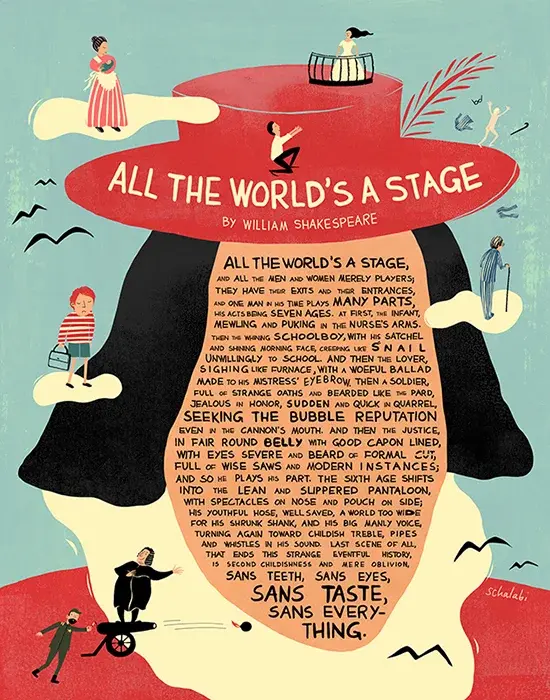
All the world's a stage, and all the men and women merely actors
- lance wong
- Jun 16
- 7 min read

We Are All Just Actors in the Movie Called Life
The other night I found myself sitting in a KTV bar surrounded by a group of married men in their fifties. Most of them worked for hedge funds, most of them were worth millions of dollars, and most of them had wives and children waiting for them at home. What should have been a normal night of partying slowly turned into an existential crisis because I could not stop observing what was happening around me. Everywhere I looked, I saw people playing characters. I saw men pretending to be someone they were not, girls pretending to feel things they did not feel, and an entire environment built on performance. The longer I sat there, the harder it became to enjoy myself because I felt like I was watching a movie unfold in real time.
The men were sitting with girls who were eighteen and nineteen years old. Some of these men had daughters around the same age. The girls would laugh at their jokes, flirt with them, hold their hands, and act interested in everything they said. Everyone in the room knew it was a performance. These girls did not actually want to be making out with fifty year old businessmen. They were there because it was their job. They were playing a role because that role paid money. At the same time, the men were performing their own role. I watched one guy step outside to answer a phone call from his wife. His entire personality changed. Suddenly he became the loving husband, the responsible father, and the trustworthy family man. Then he hung up the phone, walked back inside, and instantly became someone else. Watching that happen made me realize that everybody is acting to some degree.
The more I thought about it, the more I started noticing this behavior everywhere. Life feels less like reality and more like a giant movie where everyone is playing a character. Some people are role playing. Some people are following a script. Some people are pretending. Some people are acting. Some people are performing. The differences are small, but they all come from the same place. We constantly adjust our behavior based on who is watching us. We become different versions of ourselves depending on the situation. We say certain things around friends, different things around family, and completely different things around coworkers. Most people are so used to doing this that they do not even realize they are doing it anymore.
What fascinates me is that this behavior exists in every part of society. The waitress at a restaurant acts cheerful because being cheerful gets her bigger tips. She might be exhausted, stressed out, or having the worst day of her life, but she puts on the customer service voice because that role helps her survive. The salesman acts excited because excitement closes deals. The corporate employee acts passionate about company goals because that earns promotions. Politicians act like they care about every issue because votes depend on it. Influencers act like their lives are perfect because attention has become a form of currency. Everyone is selling something, and sometimes the product they are selling is themselves.
Even something as simple as getting dressed in the morning is a form of marketing. The clothes you wear communicate something before you even open your mouth. Maybe you want to look successful. Maybe you want to look attractive. Maybe you want to look unique, wealthy, fashionable, intelligent, or important. Whatever the reason is, you are sending a message to the world. Social media has amplified this behavior even more. People carefully select photos, captions, vacations, restaurants, and experiences to create a specific image. Most people are not posting their lives. They are posting a brand. They are creating a version of themselves that they want other people to believe exists.
The deeper I look into human behavior, the more I realize that every archetype has its own script. A beautiful woman experiences the world differently than an average-looking woman. A wealthy man experiences the world differently than a poor man. Someone born with natural beauty can often move through life with advantages that other people never receive. Someone who is not blessed with those advantages may develop humor, charisma, intelligence, communication skills, or personality because those traits help them compete in a world that rewards appearance. The funny guy learns that humor gets him attention. The tough guy learns that intimidation earns respect. The smart guy learns that intelligence earns validation. Everybody adapts to the cards they were dealt and develops a character that helps them navigate the world.
You can see these roles forming as early as high school. There is the football player, the cheerleader, the class clown, the goth kid, the skateboard kid, the nerd, the troublemaker, and the popular kid. Every group has its own identity and its own script. What is interesting is that these roles do not disappear when people become adults. They simply evolve into more sophisticated versions of themselves. The popular kid becomes the executive. The athlete becomes the family man. The rebel becomes the entrepreneur. The nerd becomes the engineer. The party girl becomes the suburban mother. The costumes change, but the acting often stays the same.
When you strip away all the complexity, most human behavior revolves around a handful of core desires. People want money because money creates freedom and security. People want sex because attraction is deeply wired into human nature. People want love because nobody wants to feel alone. People want status because status changes how others treat them. People want happiness because everyone is searching for fulfillment. Almost every action can be traced back to one of these motivations. A young woman may pretend to be interested in an older wealthy man because he represents security. A man may buy an expensive car because it signals status. Someone may spend hours curating an Instagram profile because they want validation. Someone else may stay in a job they hate because stability feels safer than uncertainty. Almost every performance has a reward attached to it.
The older I get, the less I judge people for these things because I realize everyone is adapting to different circumstances. The poor person plays a different role than the rich person. The attractive person plays a different role than the unattractive person. The young person plays a different role than the old person. Men and women often play different roles. Every person enters this movie with different advantages, different disadvantages, different opportunities, and different obstacles. They learn what works, what gets rewarded, and what helps them survive. Over time, that survival strategy slowly becomes their identity.
What I struggle with the most is figuring out how much of a person's personality is genuinely them and how much is simply the role they learned to play. If you removed money, status, social pressure, expectations, and the desire for approval, who would people actually become? Would the businessman still be the businessman? Would the influencer still be the influencer? Would the tough guy still be tough? Would the beautiful girl still behave the same way? The more I observe people, the more I believe that very few people ever truly meet themselves.
I think the entire purpose of coming to Earth is to act. Whether you believe in soul contracts, reincarnation, simulation theory, or simply the human experience, it feels like we arrive here to play different characters. We wear masks, follow scripts, chase identities, and become performers in a story that often feels written before we even understand what is happening. We spend years trying to become somebody, only to realize later that most of what we became was simply a reaction to our environment, our fears, our desires, and the roles that society rewarded us for playing.
The dark reality is that most people do not know who they actually are. They know who they had to become. They know the version of themselves that got approval from their parents. They know the version that attracted a partner. They know the version that made money. They know the version that fit into a friend group. They know the version that survived. But survival and authenticity are not always the same thing. Many people spend their entire lives perfecting a character without ever asking whether that character is really them.
Maybe that is why life feels so confusing. We spend decades becoming different versions of ourselves. We become the athlete, the entrepreneur, the lover, the partygoer, the employee, the traveler, the husband, the wife, the rebel, the follower, the winner, and sometimes the failure. We constantly shed identities and replace them with new ones. Every chapter of life introduces a new character for us to play, and most of the time we become so attached to the role that we forget we are the actor behind it.
A quote comes to mind: in order to find yourself, you must lose yourself first. The older I get, the more truth I see in those words. You do not discover who you are by sitting in a room thinking about it. You discover who you are by becoming everything that you are not. You chase things you thought would make you happy. You build identities that eventually feel empty. You follow paths that lead nowhere. You wear masks until you become exhausted from carrying them. Eventually, after enough disappointment, enough mistakes, enough success, enough failure, and enough reinventions, something starts to reveal itself.
You begin to see what genuinely resonates with your soul and what was simply conditioning. You begin to see which desires were actually yours and which were planted there by society. You begin to see which relationships brought you alive and which ones slowly drained you. You begin to see the difference between what impresses people and what fulfills you. The things that once looked important begin to lose their grip. The masks become heavier. The performance becomes harder to maintain.
Maybe that is the real purpose of all this. Not to perfectly play the role, but to eventually see through it. Not to become the character, but to remember that you were never the character in the first place. The money, the status, the relationships, the titles, and the identities all come and go. Every role eventually ends. Every mask eventually cracks. Every performance eventually reaches its final scene.
Perhaps the highest version of yourself is not something you create. Perhaps it is what remains after all the acting finally stops. Personally, I think the real goal of all of this is learning how to love yourself unconditionally. That seems to be everyone's homework in this lifetime, but the puzzle is different for every individual. We all have different wounds, different fears, different insecurities, and different lessons to overcome. The journey looks different for everyone, but the destination is the same. Life becomes a lot easier when you learn how to be comfortable in your own skin. When you stop needing the world's approval and start accepting yourself exactly as you are, the masks begin to fall away. And maybe that is the final lesson hidden inside this strange movie called life. Now go fall in love with yourself, your story, and the life you are creating!


Comments